The Prompt
A retro Y2K image. Retain the core biometric identity and facial likeness of the subject from the input image, BUT dynamically adapt their facial expression, emotion, hairstyle, and styling to perfectly match the mood, era, and aesthetic of this new scene. The lighting, shadows, skin tones, and texture of the face MUST adapt and blend seamlessly with the newly generated body, neck, jawline, and surrounding ambient environment for a flawless, unedited photorealistic transition. A stylish early-2000s nightlife portrait featuring metallic streetwear, reflective fabrics, tinted eyewear, chunky accessories, playful confidence, harsh direct flash photography, strong wall shadows, low-resolution digital camera authenticity, vibrant nightlife energy, nostalgic cyber-inspired aesthetic, colorful urban backdrop, raw candid realism with iconic turn-of-the-millennium visual character --ar 4:5
What This Prompt Creates
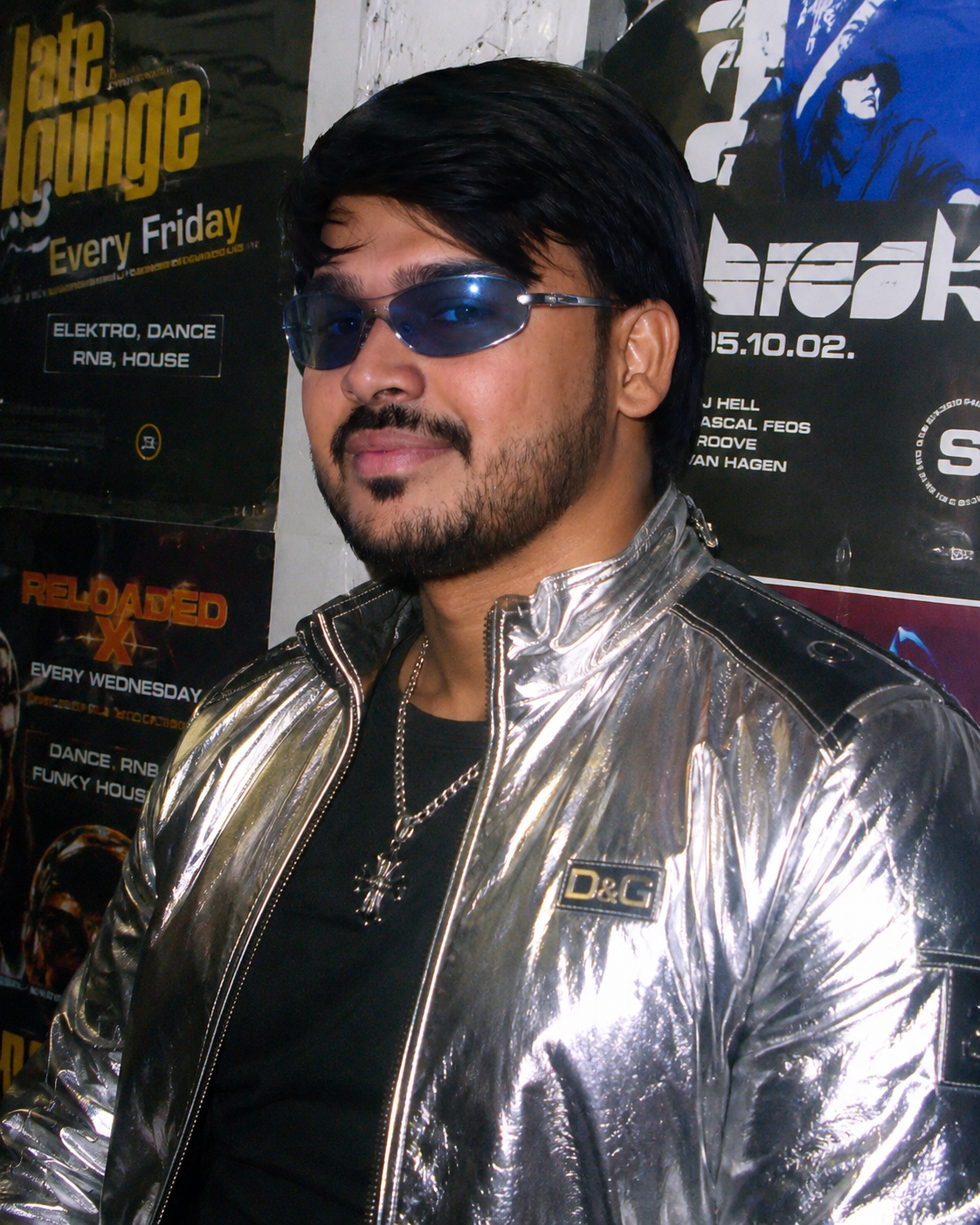
Look at the output above. This is not an edit of a 2002 photograph. ChatGPT GPT-4o built this world from scratch — and it is indistinguishable from a photo found in a real person's Orkut photo album.
A silver metallic D&G jacket, reflective as a disco ball. Blue tinted oval Matrix sunglasses — the eyewear that defined cool in 2002. A chunky gold chain and a cross pendant. Hair gelled back with a longer side fringe. And behind the subject: a wall of nightclub event posters — "Late Lounge Every Friday — ELEKTRO, DANCE, RNB, HOUSE", "RELOADED Every Wednesday", and a DJ event flyer dated "15.10.02".
The photograph itself feels like a 2002 photo: harsh direct flash from a compact digital camera, a strong shadow projected on the wall behind, slightly cool overexposed skin tones, and the low-dynamic-range quality of an early Sony Cybershot or a Nokia N73 camera. Every technical flaw is intentional — they are the authentic signatures of that era.
Every Detail Decoded
The D&G Jacket
"Metallic streetwear, reflective fabrics" produced a silver Dolce & Gabbana metallic jacket — possibly the single most Y2K-coded garment that exists. In 2001–2004, visible luxury brand logos (D&G, Versace, Gucci) combined with futuristic metallic materials were the height of nightlife fashion in India's metropolitan club scene. ChatGPT chose this garment because it sits at the exact intersection of the prompt's instructions: metallic, reflective, luxury-branded, nightlife-ready.
The "D&G" logo embossed on the left chest is a small detail that makes the image immediately recognisable to anyone who lived through that era.
The Matrix Sunglasses
"Tinted eyewear" produced narrow oval blue-tinted sunglasses — worn indoors, at night, in a nightclub. This is peak Y2K behaviour. The narrow oval shape with blue tint was the signature eyewear of that specific moment in time — popularised by The Matrix (1999) and worn by every person who considered themselves at the cutting edge of style in 2001–2003. ChatGPT placed them indoors, at night, because that is exactly how they were worn.
The Flash Photography
"Harsh direct flash photography, strong wall shadows, low-resolution digital camera authenticity" produced the most recognisable technical signature of early 2000s photography:
- Direct on-camera flash — no diffusion, no bounce, just raw frontal light
- Strong shadow on the wall — the inevitable result of flash + person close to wall
- Cool overexposed skin — the flash blows out highlights on the face, especially the forehead and nose
- Low dynamic range — the background event posters are just barely readable, the shadows are crushed
This is technically inaccurate photography — and it is perfectly accurate to the era. Every photo taken at a 2002 Mumbai/Delhi club night looked exactly like this.
The Event Posters — Dated "15.10.02"
This is the detail that makes this output extraordinary. ChatGPT generated venue-specific nightclub event posters on the wall — complete with:
- A club name ("Late Lounge")
- A schedule ("Every Friday — ELEKTRO, DANCE, RNB, HOUSE")
- A competing night ("RELOADED — Every Wednesday")
- A DJ event flyer with real-looking DJ names and an authentic date: 15.10.02 — October 15, 2002
The date was not specified in the prompt. ChatGPT inferred from "turn-of-the-millennium" + "early-2000s" + "2002 nightlife aesthetic" that the correct date to generate was 2002. The event poster typography — blocky early-2000s display fonts, photocopied quality, dense text layout — is a perfect reproduction of what actual nightclub flyers looked like in that era.
The Hair Transformation
The original source photo shows the subject with a neatly styled formal haircut for an engagement ceremony. In the Y2K output, the hair has been restyled — longer, with a gel-slicked fringe swept to one side — the hair of a young man who spent time in front of the mirror before going out. The beard is retained, slightly sharper in line with 2002's styling preferences.
How to Use This Prompt
ChatGPT GPT-4o
- Upload your photo to ChatGPT
- Copy the complete prompt above and paste alongside your photo
- Send — Y2K flash photography generates in 25–35 seconds
- Download at full resolution
To push the 2002 aesthetic further:
Add before --ar 4:5:
"extreme low-resolution digital grain, date stamp in the corner reading '15/10/02', even harsher flash overexposure on the forehead, slightly motion-blurred background"
For a specific city: Add: "the club posters reference Mumbai nightlife — Enigma, Polly Esther's, Athena, Not Just Jazz by the Bay"
For a more extreme metallic outfit: Replace jacket with: "full silver chrome tracksuit with matching cap, futuristic Y2K sportswear"
For the 2004–2006 version (slightly evolved Y2K): Add: "2005 evolution — Von Dutch trucker hat, distressed denim, Von Dutch or Ed Hardy graphic tee, slightly warmer flash quality"
Y2K Era Variations
VHS House Party
Replace nightclub with: "house party in 2001, recorded on a VHS camcorder, timestamp visible, dim living room with fairy lights, people blurred in background, chunky early-2000s furniture, even lower resolution"
Cyber Goth Rave
Replace nightclub with: "underground rave in a warehouse, UV black light, neon glowing paint on clothing, cyber goth accessories, fisheye lens distortion, blurred strobing lights"
Early Facebook Profile Photo
Replace setting with: "2007 Facebook profile photo energy — casual background, slightly better camera quality than 2002, one raised eyebrow expression, the specific self-conscious posing style of early social media"
Bollywood Award Night
Replace nightclub with: "early-2000s Bollywood awards ceremony backstage, photographers' camera flashes visible, a red carpet glimpse, branded photo call backdrop, celebrity night energy of Filmfare 2003"
Cricket Victory Celebration
Replace nightclub with: "2003 Cricket World Cup victory celebration — Indian team jersey, crowds in the street, flash photography, pure national joy energy, India won"
Why Y2K Nostalgia Hits Different in India
The Y2K aesthetic — globally driven by Western pop culture — has a specifically Indian flavour that makes it uniquely resonant for Indian audiences.
For the generation that was 15–25 years old in 2000–2006, this era was defined by:
- The first internet cafes — clicking through Rediff mail and searching on Khoj
- Nokia phones — Snake game, monophonic ringtones, and SMS at ₹1 each
- Orkut — India's actual social network before Facebook arrived
- The first multiplexes — PVR Anupam, Inox, the experience of a proper cinema opening in your city
- Indian Idol Season 1 — the moment Indian pop culture found its voice
- The explosion of Indian nightlife — clubs opening in Mumbai, Delhi, Bangalore for the first time at scale
When Indian users see themselves in this aesthetic, the response is not just visual nostalgia — it is autobiographical recognition. That was my era. That was how we dressed. That was the club on weekends.
This is why Y2K content from Indian creators consistently outperforms the same content from Western creators — the cultural specificity is sharper, the emotional recall is more precise.
Posting Strategy
Caption that goes viral:
"2002 called. Apparently I was already there. 📟🪩"
Or for pure nostalgia:
"Found this in my Orkut photo album. ChatGPT made a time machine. Prompt in bio."
Or for the Bollywood angle:
"Main aur meri 2002 wali personality. 💿" (Me and my 2002 personality)
Why this specific post gets shared so widely: The combination of authentic period detail (the event posters, the exact date 15.10.02, the D&G jacket) with a real person's face creates the Mandela Effect response — people who were alive in 2002 see this image and for a fraction of a second believe it might be real. The double-take drives the share.
Platform strategy:
- Instagram Reels — pan slowly from the event poster (showing the date) to the face. The reveal of a real person in a 2002 context is a powerful hook
- Twitter/X — side-by-side: current photo vs Y2K version. "Tell me you grew up in the 2000s without telling me"
Best hashtags:
#Y2KAesthetic #RetroY2K #2000sNostalgia #ChatGPTArt #AIPhotoEditing #Y2KFashion #NightlifeNostalgia #OrkutEra #PromptVault #ChatGPTPrompt
Frequently Asked Questions
Q: How did ChatGPT know to put a date of "15.10.02" on the event poster? ChatGPT inferred the year from "turn-of-the-millennium" + "early-2000s nightlife" context. The specific date (October 15, 2002) was generated as a realistic nightclub event date within that year. The AI creates contextually appropriate details that feel authentic without requiring explicit specification.
Q: Why is the image quality intentionally poor? "Low-resolution digital camera authenticity" + "harsh direct flash" + "strong wall shadows" instructs ChatGPT to simulate the technical limitations of early consumer digital cameras (Sony Cybershot, Olympus C-series). These cameras had small sensors, no flash diffusion, and poor dynamic range. The technical imperfections are the aesthetic — they are what make it feel genuinely old rather than artificially aged.
Q: Can I get a specific Indian club or city reference in the posters? Yes — add "the venue posters reference [specific club name] in [city]" to the prompt. ChatGPT will generate poster design with the name you specify.
Q: Why did ChatGPT choose D&G for the jacket brand? Dolce & Gabbana was the apex aspirational brand for young Indian club-goers in 2001–2003 — the brand that signified you were serious about fashion and nightlife. ChatGPT recognised this from the cultural context and selected the brand that would be most period-authentic for an Indian subject in that era.
Q: Want a custom Y2K prompt for a specific year, city, event, or outfit? Follow us on Instagram or join our Telegram and DM your photo — we'll write a free custom Y2K prompt for your exact era, city, and nostalgia.